
Services · Creative Strategy
Creative Strategy for Meta Ads, Built on Customer Research
Creative strategy decides what to make and why. We research your customers, turn what we find into distinct messaging angles, write the briefs and scripts, and plan the tests that tell us which ideas deserve more budget. It works alongside our production and media buying, or hands a clear plan to your own team.
Better ads are decided before production starts
Most brands don’t lack ad ideas. They lack a reason to choose one idea over another.
When there’s no strategy connecting the work, advertising turns into a cycle of making more and hoping something lands: new hooks on the same message, a trending format borrowed from a competitor, another batch when results dip. Performance gets harder to read because nothing was designed to teach you anything.
We start from the other end: what your customers want, what frustrates them, what they believe and what’s stopping them from buying. Those answers become the brief.
What we deliver
Customer research
Interviews, reviews, surveys and community conversations, collected in your customers' own words. This is where angles come from.
Motivations and personas
Segments built on why people buy (needs, beliefs, triggers, objections), not just who they are.
Messaging angles
Distinct reasons to buy, each tied to evidence: a motivation, a problem, an objection or a desired outcome.
Briefs, hooks and scripts
Concepts ready for production, whether we shoot them or your team does.
A testing plan
Which angles to test first, what each test should teach us, and how results feed the next round.
From research to a winning angle
Zlumber makes sheet-locking products. On Amazon, people search for a fix. On Meta, most people have accepted slipping sheets as a fact of life, so the creative has to name the problem first. Here's how research reshaped what we made.
-
Diagnose
We audited what the account had already tested and applied an Emotional Motivators framework to find the mindsets most likely to buy.
-
Spot the segment
People with adjustable beds, whose sheets slip even more than average, stood out as a distinct, high-intent group.
-
Build the angle
Ads positioned Zlumber as the fix for adjustable beds. It became the account's top-performing angle and attracted an older buyer with strong purchase intent.
-
Extend the win
The angle earned its own landing page, and its winning phrases (“smooth sheets”, “stay tucked in tight”) became the basis for new creative.
Source: Zlumber case study
Creative diversity is more than a new hook
Five ads with five different opening lines are usually one idea, five times.
Real diversity comes from different reasons to buy. One customer cares about convenience, another about quality, another needs reassurance that the product will work for them. Those motivations deserve different messages, stories and formats.
For Article’s subscription furniture pilot, interviews revealed two buyers with almost nothing in common: people moving through life transitions who wanted a furnished home without a big upfront cost, and Airbnb hosts and property managers who wanted predictable costs and consistent design. We wrote a separate messaging strategy for each, and every ad was built around a hypothesis from that research.
Two audiences, two strategies
-
Article
Consumer angle
For people moving or relocating: a furnished home without a large upfront investment.
-
Article
Business angle
For Airbnb hosts and property managers: convenience, predictable costs and design consistency.
-
Zlumber
Sheet struggles
Names a problem most people have stopped noticing, before introducing the fix.
-
Zlumber
Hot nights
A different motivation for the same product, tested as its own angle rather than as a new hook.
Who this is for
- Brands spending on Meta that keep running out of new ideas that work.
- Teams with production capacity but no clear direction on what to make next.
- Accounts where every ad says roughly the same thing.
- Marketers who want to know why an ad worked, not just which one did.
The beautiful thing is that I don’t have to come up with the strategies and think of what we need to do. Leah has been on top of that.
I hand it off and she takes care of it, it’s been a great partnership. I look forward to working with Carousel and Leah for a long time.
See how we research
Proof
From $1M a Year to $1M a Month.
How building a diverse creative ecosystem helped Perfectly Snug scale aggressively while reducing acquisition costs.
Read the case study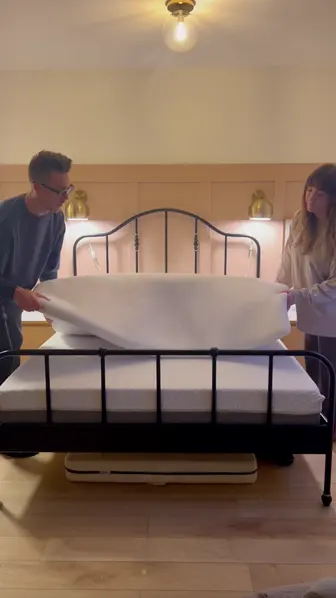
From Trying to Crack Meta Ads to Finally Seeing Traction.
How strategic creative testing cut Zlumber’s CPA down to a third of the cost in under three months.
Read the case study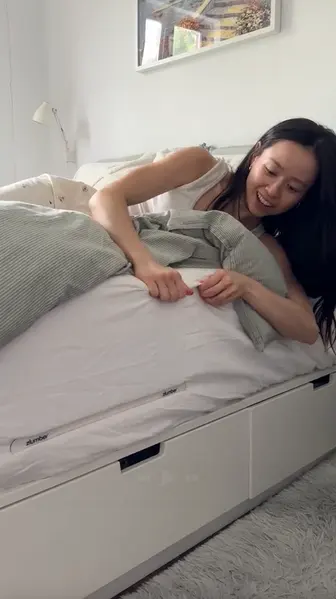
A GTM Plan for Testing a New Furniture Category.
How customer research and creative testing helped Article validate demand for a subscription furniture model before committing to national expansion.
Read the case study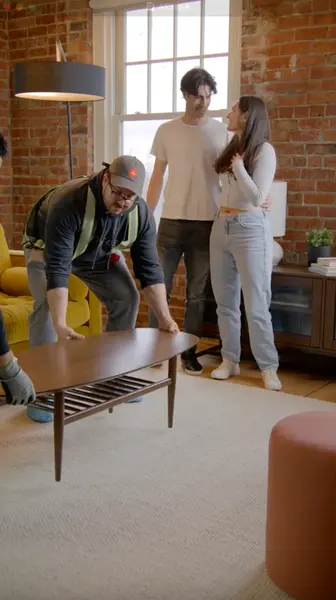
Questions buyers ask
What does a creative strategy agency do?
It decides what your ads should say, to whom, and why that message should work, before anything is produced. At Carousel Creative that means customer research, a set of distinct messaging angles, briefs and scripts for each one, and a testing plan that tells us which ideas to build on.
What's the difference between creative strategy and creative production?
Strategy chooses the message and the reason it should persuade a particular customer. Production turns that into finished videos, statics and edits. Production without strategy tends to create polished ads that repeat the same idea.
Can you develop creative strategy without managing our ads?
Yes. Strategy can support an in-house team, another production partner or a media buying agency. You receive the research findings, angles, briefs and testing recommendations, and we can review results with whoever runs the account.
How do you decide which creative angles to test?
We start from what customers actually say: their pain points, triggers, objections and the alternatives they use today. Each angle gets a written hypothesis and is ranked against existing account data where it exists. Tests are designed to confirm or challenge those hypotheses, not to prove a favourite idea right.
How often should a creative strategy be updated?
Continuously, in small steps. Core customer motivations change slowly, but which angles you prioritise should move with test results and the season. Perfectly Snug, for example, needed different lead messages in summer and winter.
Related services
- Meta Ads Management — Facebook and Instagram media buying, run by the team that makes the creative.
- Video Ad Production — Concepts, casting, shoots and edits, planned so one shoot feeds many ads.
- UGC Ad Production — Creator-led ads from brief to edit, with a real insight behind every script.
- Performance Creative — An ongoing make-test-learn cycle that builds a library of proven ads.
- Customer Research — Interviews, surveys and reviews turned into insights and ad angles.